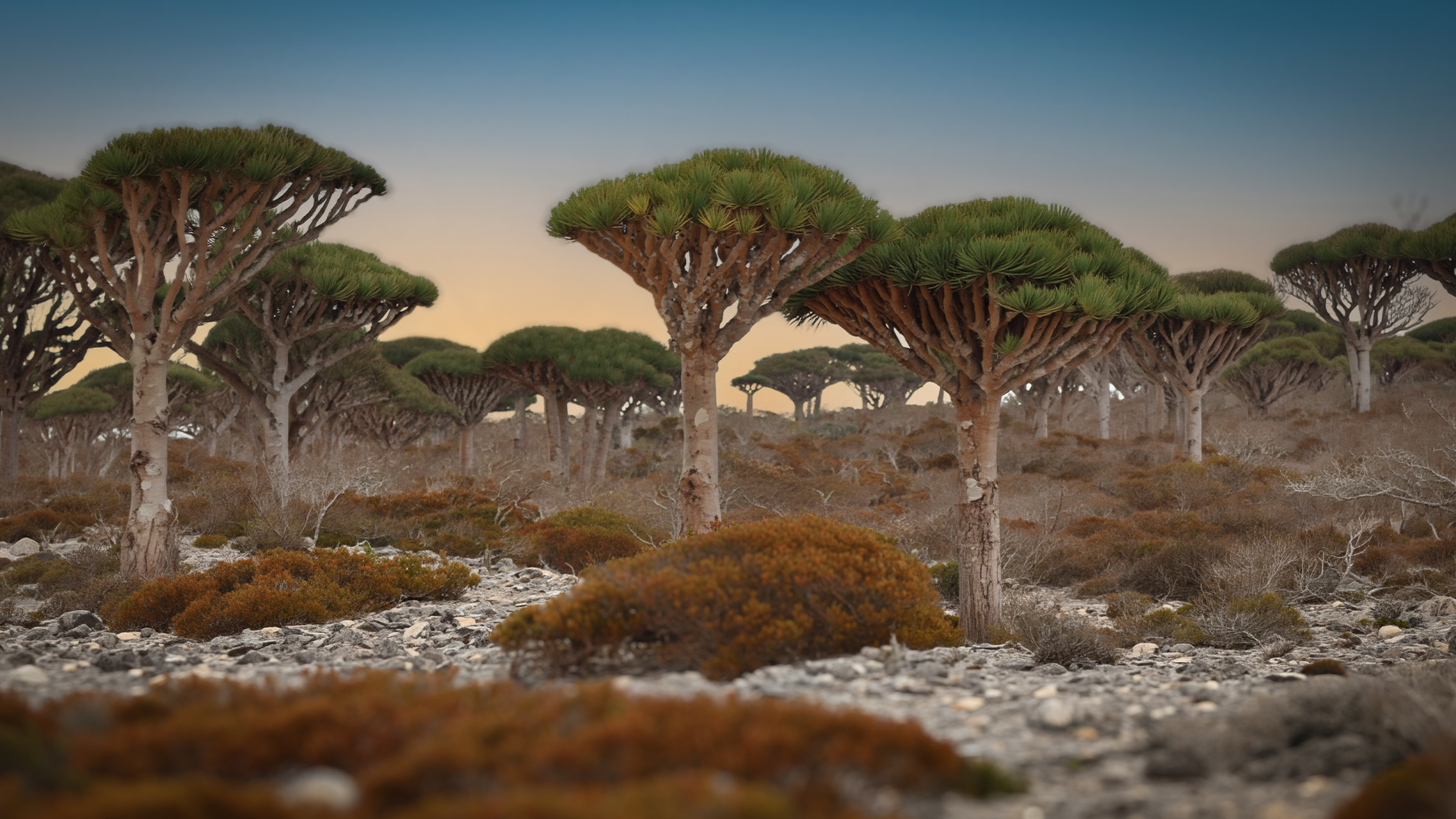
The dragon blood tree is Socotra's most iconic image — and in person, it is even more striking than in photographs. The umbrella-shaped canopy, the twisted silver-grey trunk, the deep red sap. These trees grow nowhere else on Earth in such numbers, and standing among them feels like stepping onto another planet.
This guide covers everything you need to know: what dragon blood trees are, where to find the best forests, and how to visit them as part of a Socotra expedition.
The dragon blood tree ( Dracaena cinnabari ) is endemic to Socotra — meaning it exists naturally only on this island. It gets its name from the deep crimson resin that bleeds from the bark when cut, historically used as medicine, dye, and varnish.
Dragon blood trees grow slowly and can live for several centuries, although the exact age of individual trees is difficult to determine. Their distinctive flat-topped, mushroom-like canopy evolved to maximise fog and moisture capture in Socotra's dry climate.
Dragon blood trees are classified as vulnerable on the IUCN Red List. Climate change and overgrazing are reducing their habitat. Responsible travel can reduce pressure on sensitive habitats when visitors stay on established routes, avoid damaging plants and follow local conservation guidance.
Firmihin is one of Socotra’s best-known and most accessible dragon blood tree forests. The plateau sits at around 800 metres above sea level, and on a clear morning the views across the canyon below are breathtaking. Walking through Firmihin with a local guide — who can point out notable trees, birds in the canopy and mountain-goat tracks — is one of the highlights of any Socotra expedition.
Homhil combines dragon blood trees with natural rock pools fed by freshwater springs. It is one of the few places where you can swim in a pool surrounded by dragon blood trees. A truly unique combination.
Less visited than Firmihin, the eastern plateau around Skant has some of the most dramatic and isolated dragon blood tree landscapes on the island. Reaching the area requires careful planning, local knowledge and, depending on the route, a combination of 4×4 transport and hiking.
There is no public transport on Socotra. To reach the dragon blood forests you need a 4×4 vehicle and a local driver who knows the roads. Many tracks are unpaved and require experience to navigate safely.
Every standard FEEL Socotra expedition includes a visit to Firmihin as part of the Diksam and Wadi Dirhur itinerary. The 15-day Deep Socotra expedition includes additional time in the dragon blood tree landscapes and more remote areas.
The dragon blood tree is the most famous, but Socotra has hundreds of other endemic species worth looking for:
Every standard FEEL Socotra expedition includes a visit to Firmihin as part of the Diksam and Wadi Dirhur itinerary. The 15-day Deep Socotra expedition includes additional time in the dragon blood tree landscapes and more remote areas.
Plan Your Trip →